
Hi, I’m Seth Kaufmann
My graduate degree is in exercise science. These days, people trust me with conversations about their sex lives, their marriages, and their relationship with G⟡d.
I’ve spent more than two decades obsessed with understanding the connections that run through the different dimensions of a human life. What started with the body kept widening as the people I worked with showed me how interconnected those dimensions really are.


At 23, while traveling through Europe and the Middle East, I started getting clear about what I wanted to do with my life: help people feel better in their bodies. That’s me in the photo, standing at the edge of the Red Sea literally on the day something major began to shift in me.
On that trip, I wrote in my journal, “I want to help people become the best versions of themselves. I don't know how to do that now, but that's what I am going to do.” A few weeks later, I took my first yoga class. Seventy-five minutes of moving, breathing, and being quiet on a mat felt like coming home to myself.
Before the trip was over, I applied to graduate school.
I went deep into strength and conditioning, biomechanics, physiology, and human performance. That education eventually led me to work privately with elite athletes, leaders in business and public life, and families with extraordinary wealth and influence.
But working closely with people taught me things the textbooks couldn't.
Spend enough hours with someone and eventually the whole person walks into the room. You hear about the marriage, the money, the work, the sex, the fear, the ambition, the insecurity, the family. And you see how each of those things affects the body in front of you: how someone sleeps and recovers, how they carry themselves, how they respond to stress, how much energy they have, what they believe they're capable of.
I had entered the field fascinated by what could change in the body. The people I worked with kept showing me how much of a life could show up there.
By my early thirties, the life I had spent years building was working.
I had a thriving gym and private practice, had appeared on a reality television series, and was teaching yoga and meditation through workshops and retreats around the world. I loved the work, and I was good at it. For most of a decade, I had intentionally put my career first.
Eventually, something else started asking for my attention. About six months before I met Ganga, I felt that I had accomplished enough professionally to begin investing that same energy into who I was outside of work. I wanted to become the kind of partner I would want to build a life with.
Then, on New Year's Eve, I met Ganga Devi Braun.
A week later, I flew north to teach yoga and meditation to the Rutgers football team, then continued to San Francisco to teach at Yoga Journal Live. I had looked toward opportunities like these for years as signs that I was reaching the highest levels of the field.
But I arrived in San Francisco seeing things differently.
I had just met someone raised on an ashram whose relationship with spiritual life had a depth I had never encountered. Against that experience, much of what I saw at the conference suddenly felt surprisingly superficial. Something I had worked toward for years no longer held quite the same gravity.
I had gotten where I was trying to go at almost the exact moment my sense of where I wanted to go next began to deepen and evolve.
I started slowing things down. I downsized the gym. I stepped away from the constant push to grow my audience online. Ganga and I began building a life together, teaching together, and turning more of our attention toward study, practice, relationship, and the questions that were becoming increasingly important to both of us.
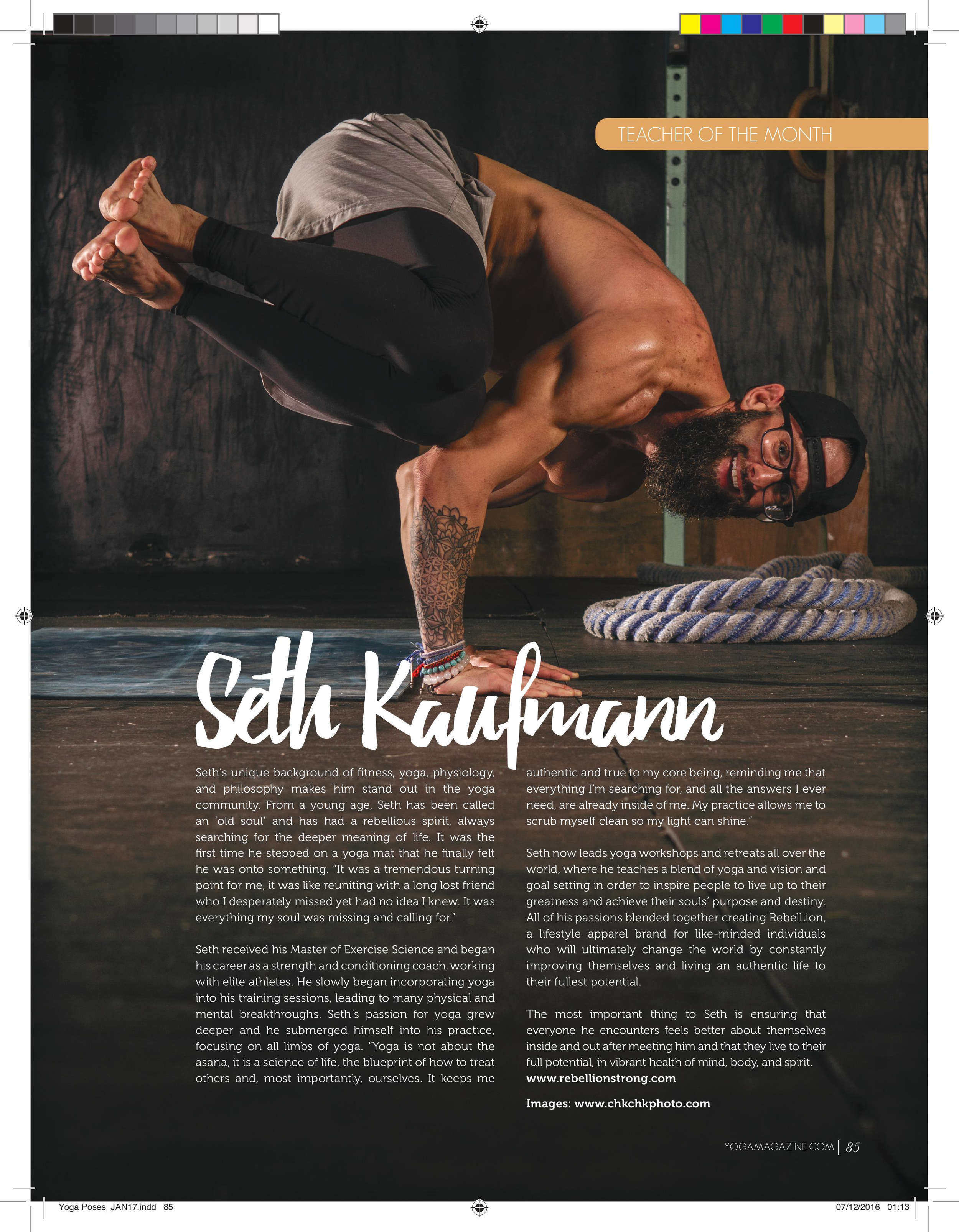
As our work deepened, people began inviting us into some of the most meaningful thresholds of their lives.
People came to us with questions about G⟡d and meaning, relationships and family, grief, major decisions, spiritual practice, and the transitions that reorganize a life. Ganga had spent her life immersed in spiritual communities, and both of us understood how easily being trusted in that territory could turn into being placed on a pedestal.
We wanted a stronger foundation for the responsibility people were already giving us.
Together, we entered a two-year interspiritual seminary. The first year took us through the world's major religious traditions, studying their histories while spending time inside their practices. That experience softened and expanded my understanding of religion and gave me better language for helping people develop a spiritual life that feels authentic to them while honoring the traditions and lineages they come from.
The second year turned toward ritual and the transitions that mark a human life: birth, marriage, death, and the passages in between. We learned to create ceremonies capable of holding people and families with different beliefs, histories, and relationships to faith.
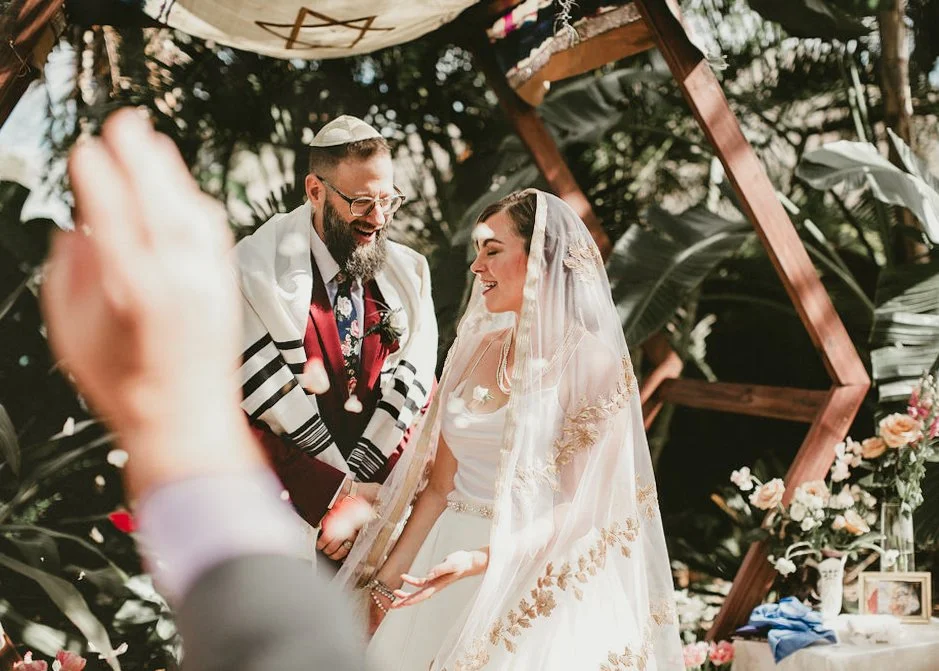
I came away understanding spiritual care as something much larger than offering guidance. It could mean helping someone build a practice, make meaning of an experience, honor where they came from, or create a ritual substantial enough to carry them through a threshold in their life.
And once again, the more people trusted me with, the more I wanted to understand.
Sexuality had been part of my inquiry long before I ever thought of becoming a sexologist.
I had spent years exploring sexuality personally, relationally, intellectually, and spiritually. And throughout my work, people had been telling me about their sexual lives. Clients who trusted me would open up about affairs and desires, shame and pleasure, the tension between what they wanted and what their relationships, religions, or families had taught them they were supposed to want. I was comfortable having conversations that many people had few places to bring.
Around the same time, my study of Tibetan Buddhism was deepening. Through Ganga and her family, I began studying and practicing within a formal lineage. I found language for experiences and ideas I had sensed for years, and I wanted to understand more.
As we approached the end of seminary, I knew sexuality was a dimension of my work I wanted to take much more seriously. Just as spiritual guidance had made me want deeper formation, I wanted a rigorous foundation for working with something as intimate and consequential as sex. That search eventually led me into three years of formal Tantra and sexology training and to becoming an accredited sexologist.

What I didn't expect was how much studying sexuality would change the way I understood everything else.
Sexology brought me deeper into trauma, somatic healing, sexual shadow, intimacy, and the subtle-body traditions of Tantra. I was encountering these ideas with a mind already shaped by years of studying the body, human performance, contemplative practice, and spirituality.
Something described through the language of trauma could look remarkably familiar through the lens of physiology. Somatic patterns changed how I thought about bodies I had worked with years earlier. Ancient maps of energy and embodiment raised questions I could now examine alongside what I understood about the nervous system, fascia, hormones, movement, and human behavior. Depth psychology offered another way of understanding patterns I was encountering through sexuality and the body.
Fields I had learned separately were beginning to illuminate one another.
Sex became a window into much more than sexual behavior. The way someone experienced desire could lead into their body, history, relationships, beliefs, adaptations, spirituality, and the culture that helped shape them.
The different dimensions of a human life I had spent years trying to understand were coming into view as parts of an interconnected whole.
The longer I did this work, the harder it became to understand a person apart from the world they were living in.
Ganga and I had been exploring this together for years. Families, communities, religion, economics, culture, and institutions all participate in shaping a human life. Their effects eventually show up in our bodies, relationships, beliefs, choices, and sense of what is possible.
We became increasingly interested in that exchange: how the world around us becomes part of who we are, and how who we become influences the relationships, communities, and systems we participate in.
As we began thinking seriously about marriage and children, those questions became more personal. We found ourselves asking what kind of world we wanted our children to grow up in, what capacities they would need to navigate it, and what we could contribute to creating the conditions for people and the larger living world to thrive. The scale of the inquiry had changed.

By then, Ganga and I had spent years building a life around these questions together.
We had taught workshops, seminars, and retreats together. We studied constantly, developed ideas through conversation, and tested them in our relationship and our work. Ganga brought a lifetime of study and practice across spirituality, ecology, regenerative development, and living-systems thinking to questions I had learned to approach through the body, human development, and individual transformation.
When Ganga became pregnant, something in me became almost obsessive. I had just completed my Tantra and sexology training, and I wanted to take more than twenty years of experience and turn it into a coherent curriculum. We began asking what someone actually needed to understand and practice to live a healthy, meaningful, multidimensional life.
That early curriculum became Holistic Systems Coaching. We taught it, tested it, changed it, and kept developing the frameworks underneath it. That work evolved into what is now BeginWithin, our year-long foundational program, and became the foundation for the Emunah Academy of Multidimensional Living, the educational hearth for our growing body of work.
The larger vision became EMUNAH.
I had already learned from building a successful gym and private practice that eventually your own time becomes the limit of what you can contribute. Ganga and I wanted to build something that could grow beyond the two of us while preserving the depth and intimacy at the heart of how we teach. The Academy gave our educational work a home. EMUNAH gave us a larger ecosystem in which education, community, culture, publishing, practice, and new forms of participation could continue to develop. Today, EMUNAH is the home for the body of work we’ve spent our lives developing together.
Explore EMUNAH →
These days, I think about my work more simply than I once did.
I want to help people remember who they are and recognize how much possibility still exists in who they can become.
That now takes different forms through my private work, teaching, writing, speaking, the books I’m developing, and everything Ganga and I continue building through EMUNAH.
After all these years, I’m still fascinated by the same thing: what a human being can become.
🖖✨🐌,
Seth!
SELECTED BACKGROUND
EDUCATION & CREDENTIALS
M.S., Exercise Science & Health Promotion
Strength & Conditioning
Florida Atlantic University
Certified Strength & Conditioning Specialist (CSCS)
National Strength & Conditioning Association
Certified Sexologist
Trauma of Money™ Certified Practitioner
Ordained Interspiritual Minister
OneSpirit Interfaith Seminary
SELECTED PROFESSIONAL EXPERIENCE
Founder, Iron Lion Fitness
20+ years of private coaching and practitioner work
Private practice with individuals, couples, and families
Psychedelic harm reduction practitioner
TRAINING & FORMATION
Tantra & Sexology
Three years of formal training
Interspiritual Ministry
Two-year seminary and ministerial formation
Yoga & Meditation
Long-term study, practice, and teaching
SELECTED TEACHING & MEDIA
Yoga Journal LIVE!
Yoga & meditation teacher
A&E’s Fit to Fat to Fit
Featured trainer & cast member
Rutgers University Football
Yoga & meditation training for strength & conditioning staff
International workshops, seminars & retreats
Teaching across movement, meditation, sexuality & human development